
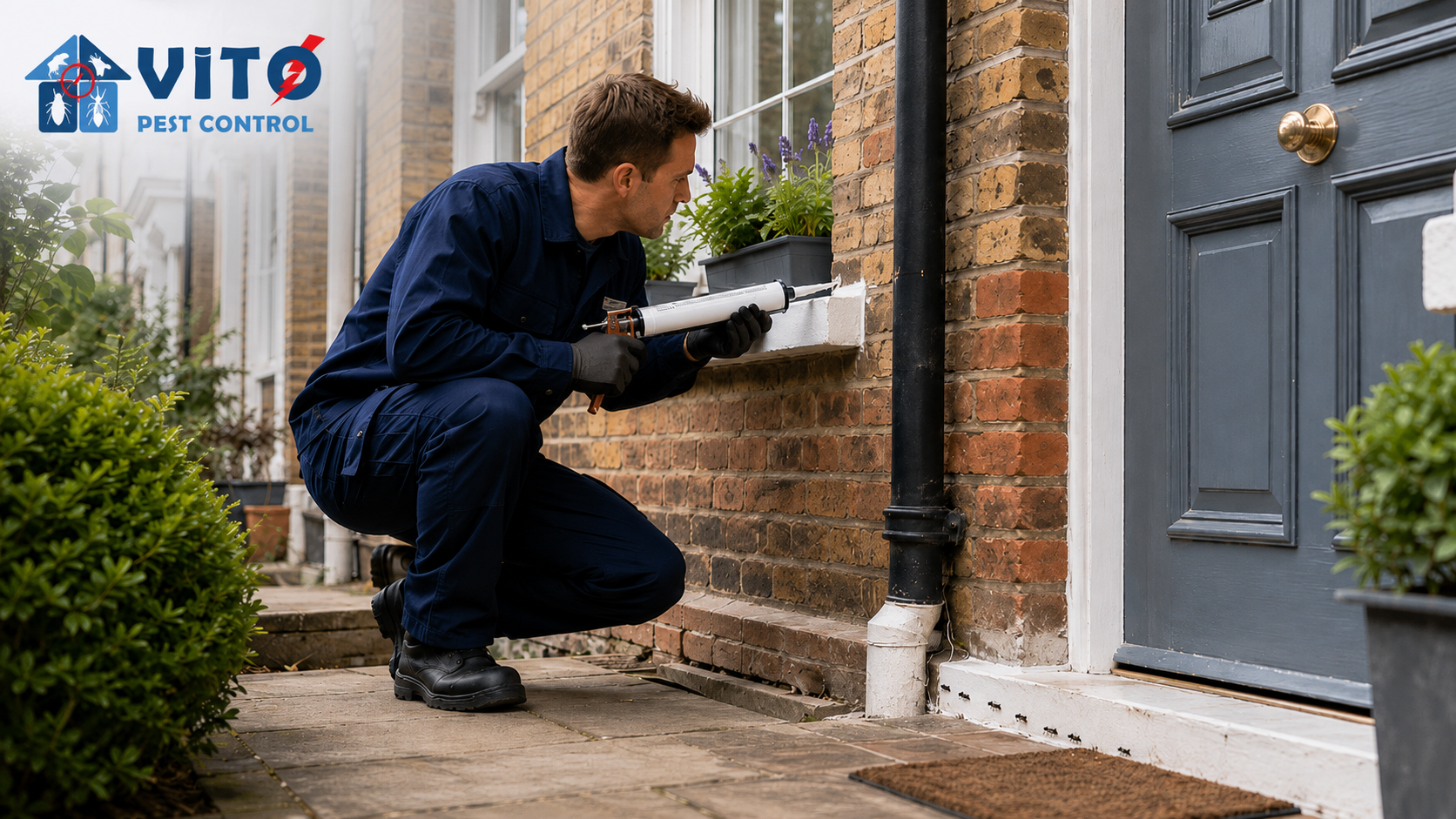
You may keep your home clean and tidy, yet mice, ants or cockroaches can still find their way inside. Understanding the pest entry points London homeowners commonly overlook is the first step towards lasting pest control. In many cases, pests enter through small gaps around doors, windows, pipes, walls and roof spaces rather than because food has been left out.
Common Pest Entry Points Around Doors and Windows
London houses are often associated with old sash windows and period-style doors, and they are an easy entry point for insects and even small rodents. Gaps around outside doors, broken frames and decaying weatherstripping give ants, spiders and flies a place to get through.
Install draught excluders on outside doors, fix broken or worn weatherstripping, and seal windows with silicone around the frames. A simple and inexpensive solution to the front and back door gap is by installing a door sweep.
Cracks in Exterior Walls and Foundations
Small cracks in brickwork, render or foundations that can occur in older housing in London, especially in Victorian and Edwardian terraced housing, are a feature that may develop over time. These cracks can be big enough for cockroaches, ants and even mice to get through, particularly where pipework runs through a wall.
Check outside your home once every half year. Use masonry filler to seal hairline cracks and expand the base of pipe entry areas with expanding foam or wire wool (rodents cannot chew through).
Pest Entry Points Around Pipes, Vents and Utility Lines
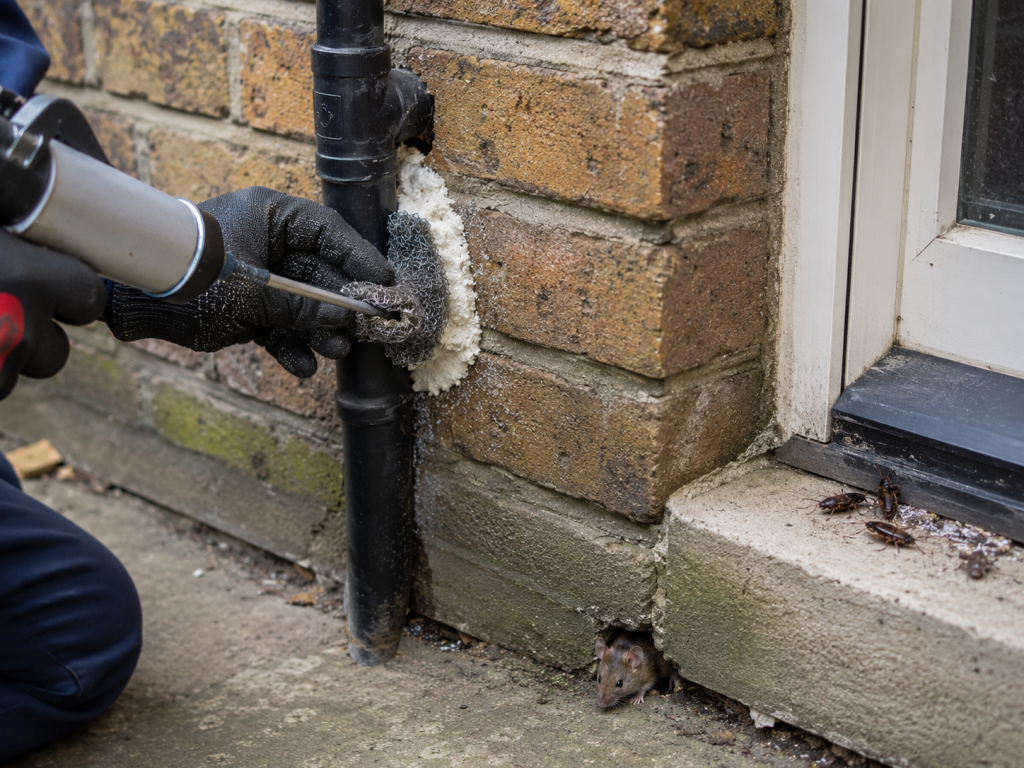
Any place a pipe, cable or vent goes through an outside wall will have a small opening left by the initial installation. They are popular among mice, which can enter through a hole as small as a 10p piece and are also useful for cockroaches and other crawling insects.
Seal every utility entrance with a rodent-proof sealant or with steel wool & expanding foam. Mice can chew through standard caulk, so it won’t deter them.
Damaged Roofing, Soffits and Loft Vents
One of the most neglected points of entry is roof spaces. Squirrels, mice and even wasps can readily get into your loft through loose tiles, gaps in loft vents, damaged fascia boards and poor loft vent fitting.
Inspect soffits around roof vents and repair leaks, install fine wire mesh over roof vent openings and replace any loose or broken roof tiles as soon as possible. Annual loft inspections can prevent infestation issues from occurring.
Gaps under garage doors and garden sheds
Garages and sheds are often not as well insulated as the house and are a pathway for rats, mice and insects to find their way into the house. A rat can easily fit through a hole under a garage door.
Make sure garage doors are fitted with a rubber threshold seal, keep shed doors tightly fitted and closed, and do not store food waste, bird seed or pet food in sheds or garages.
Why Professional Pest Proofing in London May Be Needed
While sealing gaps is a great first step, it doesn’t stop pests that are already inside, and gaps that cannot be seen at eye level, such as behind kitchen units, under decking or high up on a roofline, are easy to miss. That’s where professionals come in handy.
At Vito Pest Control, we have been assisting homeowners and businesses in London for more than 20 years in managing just this issue. Our technicians don’t just treat something they see; we inspect the property to determine all access points and provide proofing recommendations, and combine them with the treatment to ensure they don’t return. We are DBS checked, NPTA approved and RSPH qualified and can be contacted at any time for the removal of a single wasp nest to the complete rodent proofing service. From rats and mice to cockroaches, ants or just a persistent bug problem you simply can’t figure out, our team can inspect where it is coming from, identify the point and close off all the entry points to ensure your home is future-proofed against pests just right and at the right, affordable cost.
Frequently Asked Questions
Check for droppings, bite marks around pipes and skirting boards, grease around pipes or light around pipework and vents. The best way to detect all entry points is to hire a professional pest controller who can inspect the house and see where the entry points are located, particularly in lofts or under floors where they are not readily visible.
Simple gaps at doors and windows may be easily closed using homemade materials. If the cracks are larger or if there are roof access points or any gap that is connected to an existing infestation, however, it’s best to have a professional seal the gap and treat the current infestation.
These include steel wool, wire mesh and metal flashing, as these are materials that rodents are not able to chew through. Rodent-proofing is most effective when a wire barrier is used in combination with standard caulk, foam or plastic fillers.
It’s always good practice to have a seasonal check, especially prior to the autumn and winter seasons when rodents are particularly active for shelter. If you had a pest problem previously, it is advisable to check periodically every few months since pests will reappear in the same access areas.
Final Words
Finally, you know that sealing the entry points into your house is one of the best long-term pest control methods you can implement if you’ve been looking to keep your home pest-free. Each opening you seal is one more closed door that will help keep rats, mice, ants, cockroaches, and flies out, plus it means that any treatment you’ve undertaken is effective; the pests won’t find a new entry point within weeks. Oh
It’s simple to begin with the obvious places, including the doors, windows, pipework and loft. If you aren’t sure if your home is completely sealed off, or you already have some signs of an infestation, Vito Pest Control is here 24/7 in London to check your home out, treat the problem from source and help you pest-proof your home. Just call 020 808 74052 and ensure all the entry points are sealed, and your space is pest-free