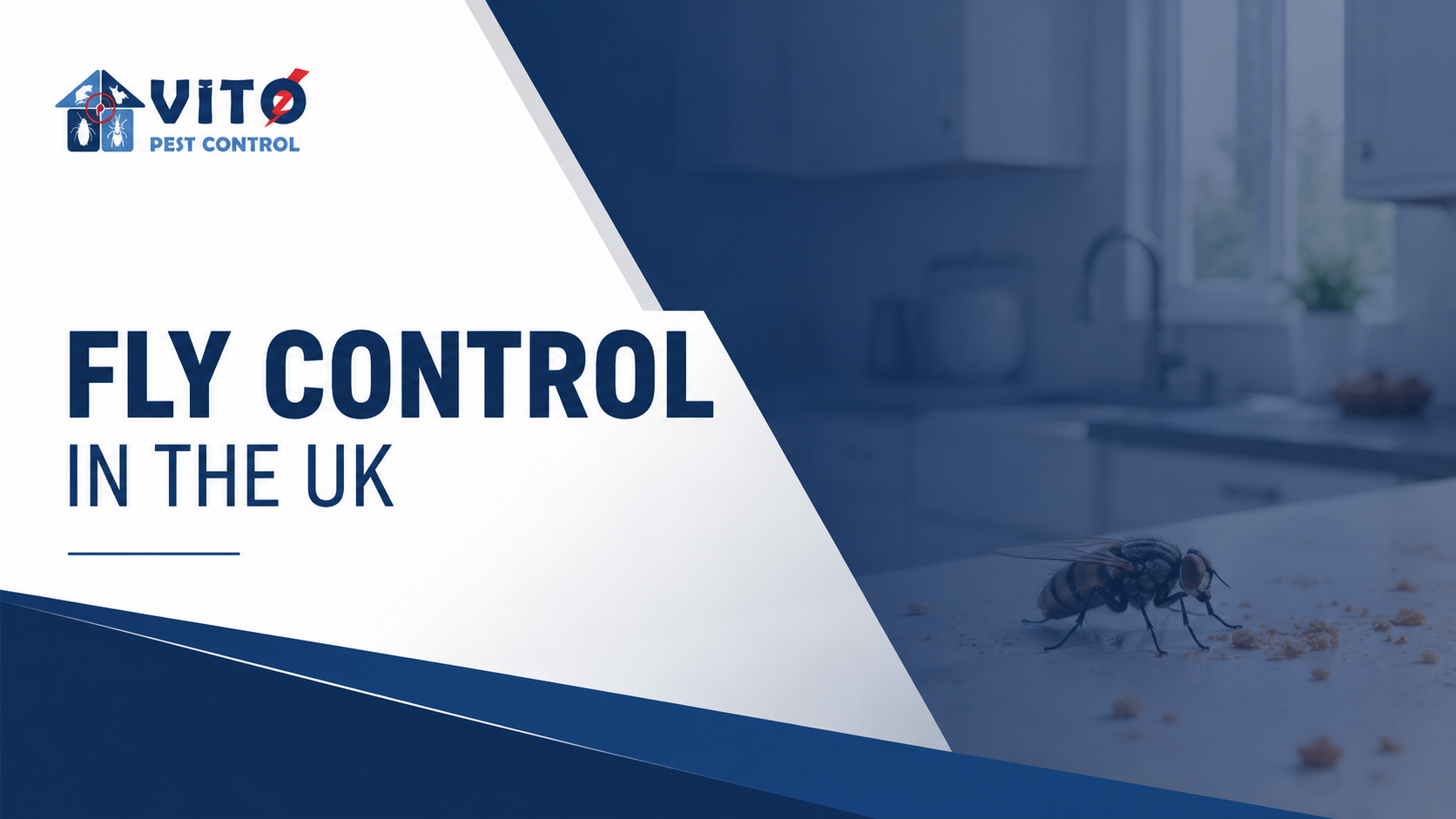
Flies carry almost 2 million bacteria from one place to another and leave them through their bodies, legs, and mouthparts. The buzzing of flies in your kitchen and living room sounds annoying, but they not only make an annoying sound but also look annoying and cause diseases .Fly control London is important for homeowners who want to maintain a clean and hygienic living environment.
A few times, you wave them away with a rolled-up magazine, but the flies come back from the bin. A drain fly on every surface carries more bacteria by sitting on food items, leaving behind bacteria that go into your stomach and cause infection, food poisoning, and diarrhea. That is the actual reason UK homeowners need a reliable flies control service, and with Vitopestcontrol you get a solution before the flies become a big risk.
In this blog, you will explore the early signs that give you warning about the flies, the idea that actually works by following the prevention tips, and how professional treatment offers a long-term reliable solution.
Why Fly Control in the UK Helps Reduce Disease Risks
flies do not bite or attack like wasp or bed bugs the buzz sound and flying around you feel annoying especially when at your place you find more flies the risk become increase because they act as a mechanical vector, Physically transporting the bacteria and pathogens from contaminated sources (bins, drains, pet waste, decaying food, etc.) directly onto surfaces on which you cook, eat and prepare food.
According to public health researchers, in some seasons, especially during June or July, fly activity spikes, and in hospitals you see multiple infected cases, which enhances the need for flies control in the UK. Campylobacter infections in England and Wales increased annually, a clear example of how rising fly numbers affect them. Here are a few diseases that are transmitted from flies
- Salmonella
- E. coli
- Campylobacter
- Dysentery
- Other gastrointestinal infections
The common house fly is well known to be a risk in kitchens, bins, and food preparation and storage areas, and is suspected of carrying over 65 different diseases worldwide, although not all fly species carry them.
How Do Flies Spread Bacteria in Your Home?
Before controlling flies, homeowners should understand how they can transfer contamination around the home. Flies can move between waste, decaying organic material and food-contact surfaces in several ways:
- Regurgitation: House flies feed on liquid food. They may release digestive fluids onto solid food to help break it down before feeding, which can potentially transfer contaminants onto the surface.
- Defecation: Flies regularly defecate while feeding and resting, meaning contaminated material can potentially be deposited on surfaces where they land.
- Surface contact: Bacteria and other contaminants can attach to a fly’s legs and body and may be transferred when the fly lands on food, worktops, chopping boards or other surfaces.
For this reason, homeowners should not ignore persistent fly activity, particularly when flies repeatedly appear around food preparation areas, bins, drains or other potential breeding sites.
Common Types of Flies Found in UK Homes
There are different types of flies some you find in your indoor area and few around home but before to know about the danger you must be aware of the fly types. Here are few you must knew:
- House fly (Musca domestica): a most common indoor pest found in your kitchen and transmits disease
- Bluebottle (Calliphora vomitoria): bigger, metallic blue, attracted to meat and decaying organic material.
- Cluster fly (Pollenia rudis): not quite a hygiene problem but can be seen in autumn in large numbers in the house, especially in lofts and window recesses.
- Fruit fly (Drosophila species): Little flies that are attracted to ripe or decaying fruit, drains and recycling bins.
The two species, house flies and bluebottles, are most worrying from a health perspective. Most UK households will experience maximum fly activity in warm weather between late spring and early autumn when flies breed at a higher rate and food is more likely to be left out or bins left open.
Warning Signs of a Fly Infestation at Home
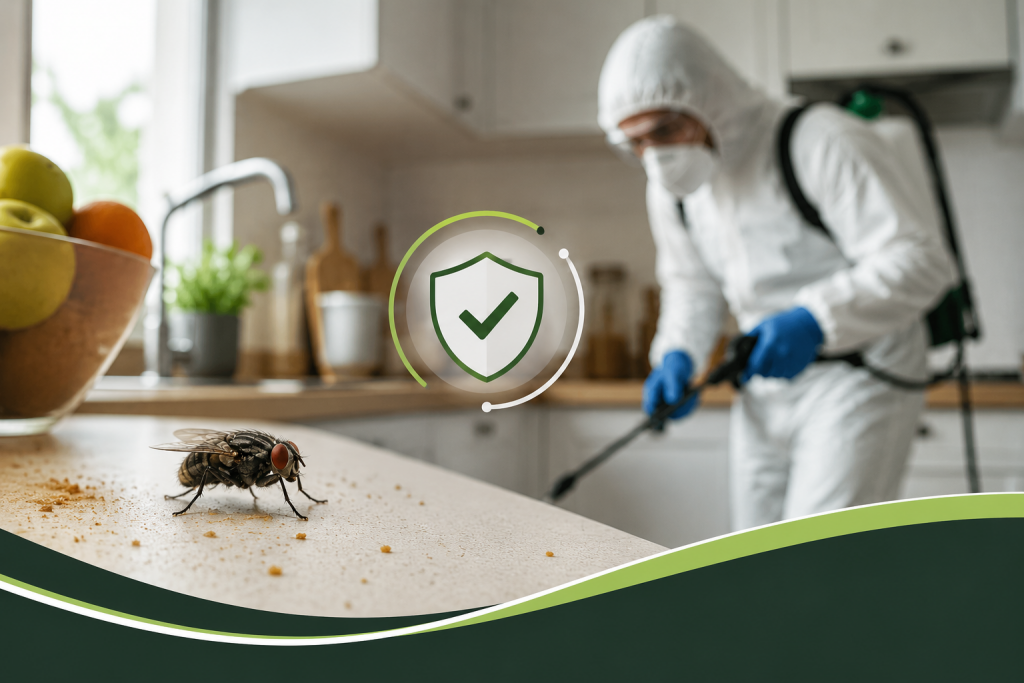
Flies may seem like nothing more than an annoying household nuisance, but they can also contribute to contamination when they move between waste, drains, decaying organic matter and food preparation areas. This is why effective fly control in the UK is important for homeowners who want to maintain a clean and hygienic living environment.
From house flies and bluebottles to fruit flies, different species can enter homes for different reasons. Understanding the warning signs, removing potential breeding sources and using appropriate fly control services can help reduce the risk of contamination and prevent a small fly problem from becoming a larger infestation.
How to Get Rid of Flies in the House (UK)
More than resolving a problem using preventive measures to avoid the risk, it is much more cost-effective and an effective way that helps you avoid the flies disease, especially if you have children who must be crawling on toys; surfaces are a big risk for them, as are the elderly ones who have a weak metabolism. Here are some preventative measures that save you from the real danger
- Seal food waste: Tighten bin lids and empty them often, particularly during the summer months.
- Clean drains: One area that’s easy to miss is a build-up of grease and organic material in kitchen and bathroom drains.
- Fit fly screens: Easy-mesh screens for windows and doors keep flies out while allowing air to circulate.
- Clear standing water: Any wet cloths, blocked gutters, and water bowls left out overnight for pets are magnets for flies.
- Store food properly: Cover fruits and leftovers, and avoid leaving pet food out for long periods.
- Install UV traps or fly papers in problem areas, such as utility rooms and near bins.
These measures are effective for normal fly problems. Their drawbacks lie in the fact that once they have discovered an indoor breeding spot, such as a drain, behind an appliance, or in a hard-to-reach location.
How Professional Vito Pest Control Avoids Diseases with Fly Control.
If flies persist even after good housekeeping, or if larvae are found in the house, it is most likely a breeding site rather than flies wandering in from elsewhere. At this stage, you need professional fly control. With Vito Pest Control in the UK, you get professional treatments and more effective home remedies that prevent illness, because a trained technician will be able to determine what is actually in your home, treat it, and tell you how to help prevent recurrence.
Our technicians are DBS-checked and trained to NPTA and RSPH standards, and are available 24/7 across London to deal with this kind of emergency pest problem that has a hygiene aspect. It’s a recurring issue in the kitchen, or you think it may be a breeding ground you can’t find on your own. Still, we, as pest control professionals, inspect, detect, and fix fly infestations to keep our home safe from flies for longer. Professional fly control London services can help identify the source of persistent fly activity.
Frequently Asked Questions
Flies can contribute to contamination when they move between waste, decaying material and food or food-contact surfaces. This can increase the risk of exposure to harmful bacteria and other pathogens. Good food hygiene, cleaning and effective fly prevention can help reduce this risk.
Flies can transfer bacteria and other contaminants between dirty areas and food or food-contact surfaces. Bacteria associated with foodborne illness include Salmonella, E. coli and Campylobacter. The risk depends on the type of fly, where it has been feeding and the surfaces it contacts.
Fly control is done continuously, eliminating breeding grounds, closing entry points, and reducing the movement of flies between contaminated areas (bins, drains) and food-prep surfaces, not just addressing visible flies.
Not always; a few flies that enter from outside can often be controlled with the prevention measures mentioned above. However, if flies are persistent in returning to the same area, or you see larvae or fly dirt inside the home, it’s likely that a breeding site exists and warrants a professional inspection.
Final Thoughts on Fly Control and Disease Prevention
If you are dealing with persistent flies, recurring fly activity or signs of a breeding site, professional inspection can help identify the source and determine the appropriate treatment. Vito Pest Control provides pest control services across London with trained technicians available for residential and commercial pest problems. Contact the team on 020 808 74052 to discuss your fly problem and arrange an inspection.